
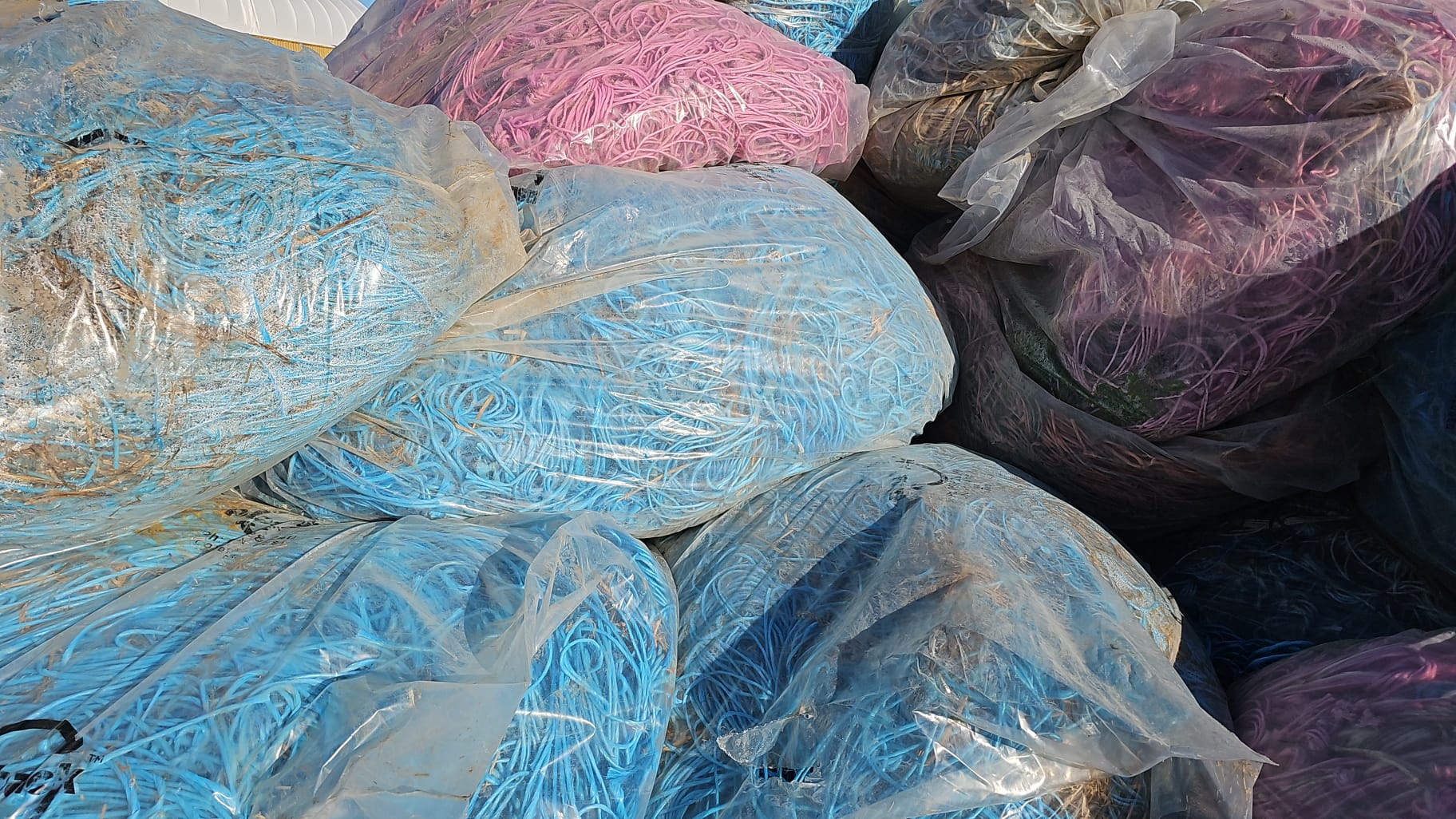
Polypropylene (PP) twine – also known as baling twine – plays an essential role on farms across New Zealand, keeping hay and silage bales secure through the season. But when it comes time to dispose of used twine, how it’s recycled matters just as much as ensuring it gets recycled at all.
PP Twine Must Be Recycled in Its Own Stream
PP twine is made from a specific type of plastic – polypropylene (PP) – which has a different melting point and recycling process to other agricultural plastics such as bale wrap, silage covers, and pit sheets.
Because of this, PP twine cannot be mixed with these other materials in the same Plasback liner.
Mixing twine with bale wrap or covers leads to contamination, which can make it impossible to recycle effectively. When contaminated, the plastic may need to be landfilled instead of reprocessed – the opposite of what everyone is trying to achieve.
How the Recycling Process Works
When you place PP twine into a separate Plasback liner, it allows it to be easily sorted, cleaned, and processed through equipment designed specifically for PP materials. This material can then be recycled into new, useful products such as rope, buckets, and other durable items — keeping valuable resources in circulation.
In contrast, bale wrap and silage film are made from low-density polyethylene (LDPE) and are recycled through a completely different process. Mixing the two causes major problems during shredding and melting, reducing the quality of the recycled product.
Best Practice for PP Twine Recycling
To make sure your PP twine is accepted for recycling and handled efficiently, follow these simple steps:
- Collect separately: Always place PP twine in its own Plasback liner — never mix with other plastics.
- Keep clean and dry: Remove as much dirt, silage, and vegetation as possible before placing into the liner.
- Avoid contamination: Don’t add PP bags, bale net, or general waste into the twine liner.
- Use your Plasback collection service: Once full, tie off the liner securely and have it collected through your regular Plasback system.
Working Together for a Cleaner Future
When PP twine is kept clean and separate, it can be successfully recycled and repurposed into new, durable products. In fact, Plasback’s recycling process turns used PP twine into Tuffdeck — one of our most popular and practical products used across farms and industrial sites throughout New Zealand.
By taking care to separate PP twine from other agri-plastics, you’re helping ensure that every kilogram of collected material can be turned into something new — rather than wasted.
It’s a small change on-farm that makes a big difference to the success of agricultural plastic recycling across New Zealand.